Historic buildings are regularly rehabilitated to incorporate improved performance features, improved sustainability, or to upgrade the appearance of the building. One way to increase the sustainability, durability, and energy performance of a building is to install a composite synthetic roof. Let’s take a look at what you need to know about historic building preservation and the use of composite roofing materials.
What is a Composite Synthetic Roof?
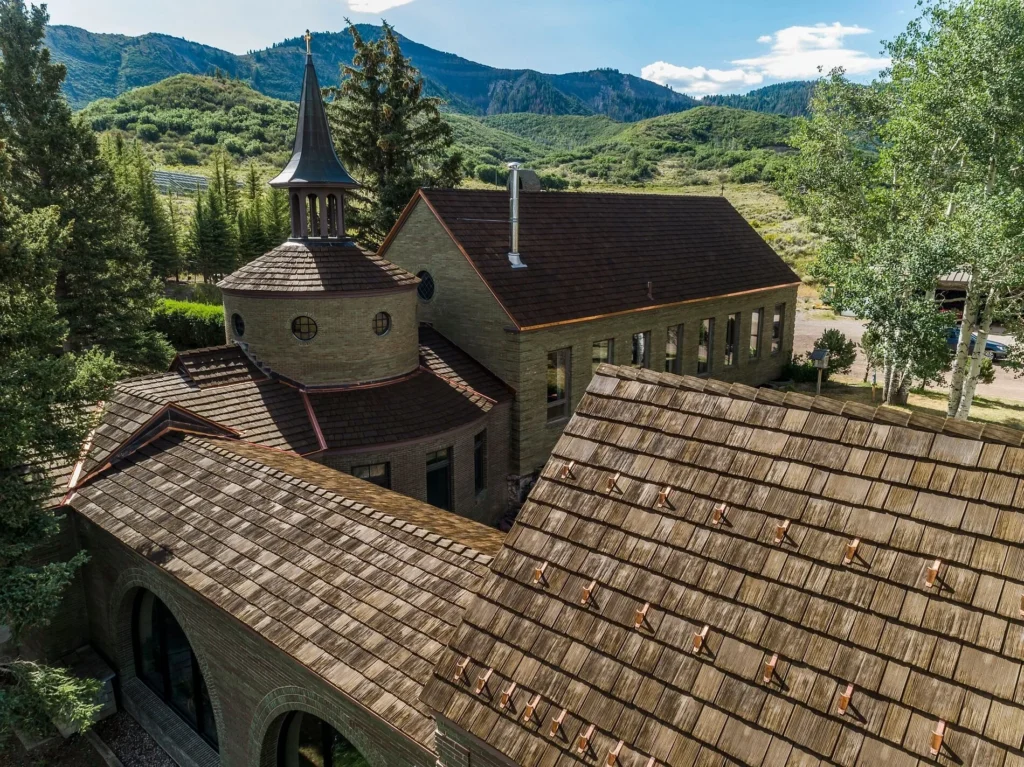
“Synthetic” or “composite” as it pertains to steep-slope roofing materials refers to manufactured products that contain recycled materials, plastic, or rubber as a key ingredient. Often, they are manufactured to replicate the appearance of asphalt shingles, concrete tile, clay tile, metal panels, slate, or wood shakes shingles.
Many synthetic roofing manufacturers offer the exact appearance of natural materials like wood or slate, but their unique manufacturing process makes them much more durable and reliable than their natural counterparts.
So, why upgrade to a synthetic composite roofing material?
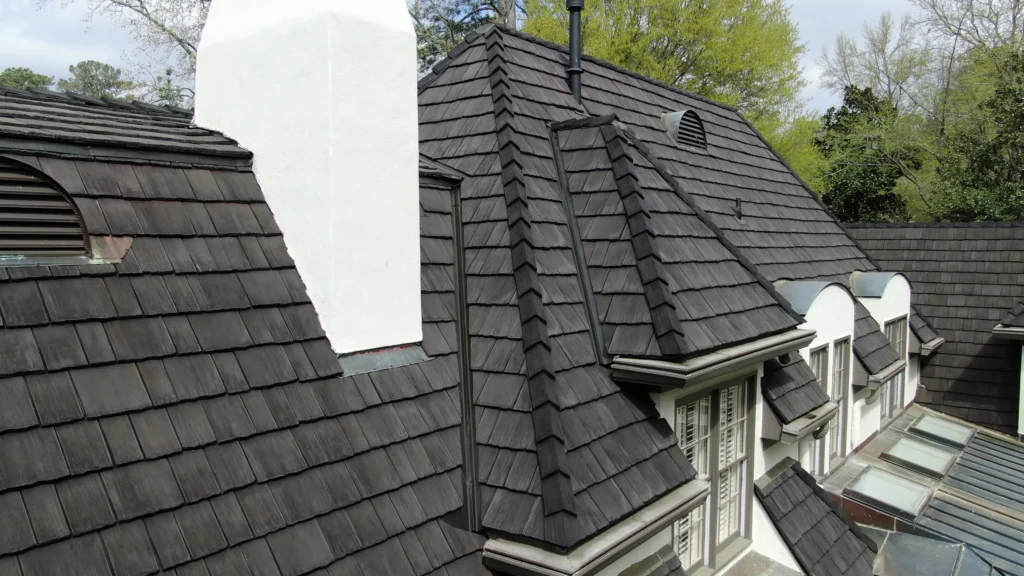
Many historical buildings still have a natural roof. A natural roof is when the roof is made from natural materials, the most common types are wood shake shingles, natural slate, or clay tile. Synthetic composite roofing materials offer the long-term value, durability, and reliability that natural materials do not. A synthetic composite roof is more durable than natural materials and will last longer. Architects and preservation groups understand the importance of longevity and reliability in building materials so they will recommend a synthetic composite roofing material.
Do Your Research
When restoring the roof on a historical building, research is important. Understanding the roof’s history will also help the roofing contractor if they plan to re-roof the structure. It is best if documentary research includes original building plans or specifications, early insurance surveys, personal papers or files from past owners, or newspaper descriptions. This can help create a better understanding of the history of the building and the roof. Old photographs can also provide evidence of building details. Below are more factors you must consider prior to re-roofing a historical building:
- Understand that weight is a major concern on most historic buildings, so choose a lightweight roofing material.
- Understand that low maintenance roofing materials provide exceptional value to a historical building.
- Along with a thorough understanding of the building, a physical investigation of the roof by a trained expert prior to re-roofing is necessary.
So, what else matters when re-roofing a historic structure?
Visual Impact
When considering the visual impact of a synthetic composite roof on a historic building, it must first be determined whether the building can accommodate the addition of a synthetic roof without altering its character. Making the transition from real slate or Spanish clay tile to a synthetic composite material may alter the overall appearance of the building, so it is best to weigh your options and choose a material that will not change the character of the building.
Physical Impact
If you can add a synthetic roof to a historic building without negatively impacting its character, you must consider the physical impact of the synthetic roofing material. Increased roof load and added weight must be analyzed prior to choosing a synthetic composite roof for a historical building. It is recommended to avoid heavy roofing materials when upgrading to a synthetic roof covering.
Maintenance
If your historic building will be upgrading to a synthetic composite material, understand that a low maintenance product is a wise investment. Having to constantly maintain a roof can be an unexpected out of pocket expense. Choosing a low maintenance product can help you avoid the headache and hassle of hiring a roofing contractor every time you run into an issue. Building material manufacturers often offer manufacturer’s warranty to back their products, if you are re-roofing a historical building choose a product that offers a warranty.
Benefits of Synthetic Composite CEDUR Roofs on Historical Buildings
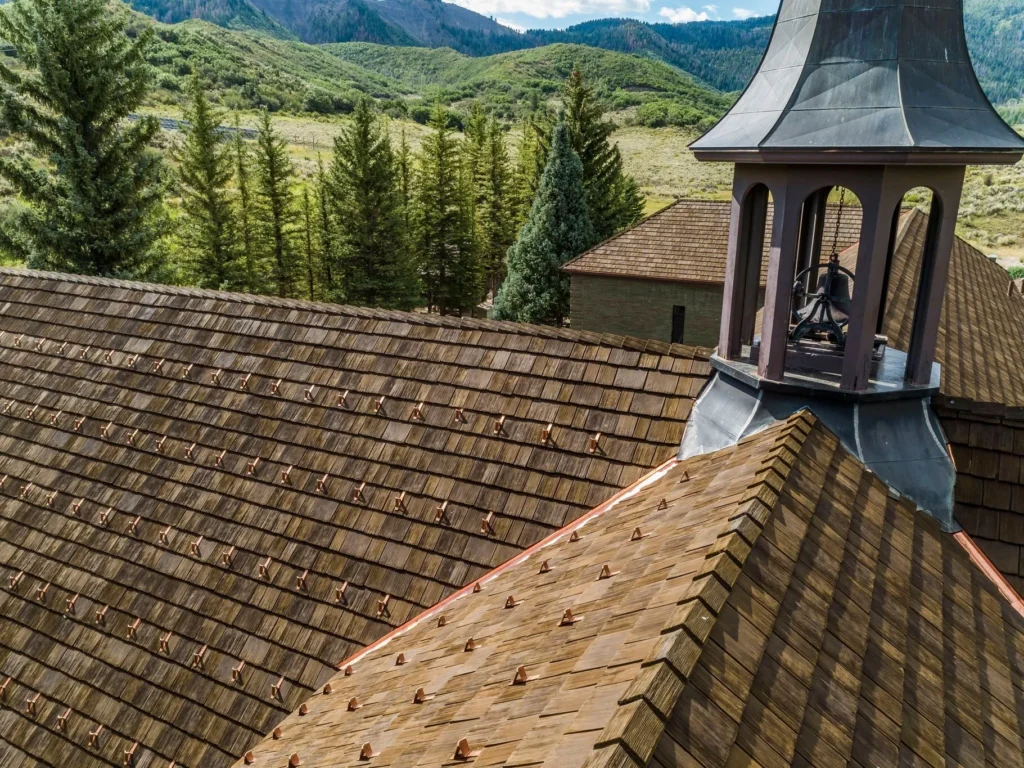
The restoration of historic buildings helps ensure a longer life span. Installing a new CEDUR composite roof provides an array of long-term benefits for any historical building. Here are more benefits to installing a CEDUR composite roofing system:
Sustainability
The intent of sustainability is to encourage the use of environmentally friendly options that will last for a long period of time. In the roofing space, this is achieved by installing products that provide long-term reliability and long-term cost effectiveness without threatening our environment.
Energy Performance
The right synthetic roof covering can help keep a historic building cooler in the summer and warmer in the winter. A cool roof rated product can help save money on energy consumption and better insulate the building underneath.
Manufacturer’s Warranty
Most synthetic composite roofing materials include a warranty. Before upgrading the roof on a historical building, see if the manufacturer offers a warranty.
Appearance
Synthetic composite roofing materials substantially upgrade the appearance of a historical property
High performance features:
- Class A Fire Rating – best industry rating
- ASTM E108 fire rating
- Certified by Underwriters Laboratories (UL)
- No need for special fire-resistant underlayment
- ICC Certified
- Class 4 Impact Rating – best industry rating
- UL 2218 impact rating
- Certified by Underwriters Laboratories (UL)
- ICC Certified
- Lightweight – just 170 pounds per square
- Improves your roofs insulation value
- 50 Year Limited Material Warranty
- Certified to 115 mph wind speeds
- Resistant to freeze/thaw cycles
- Low water absorption
- Low maintenance
Learn why architects and preservationists prefer CEDUR roofing materials.