The 2020 Western United States wildfire season has been devastating. As of September 14, 2020 more than 7,000 California wildfires have burned over 3.5 million acres of land, making 2020 the largest wildfire season in California state history. Colorado, Oregon, Montana, and Washington have also experienced dangerous wildfires. Severe thunderstorms, strong gusty winds, and hot dry terrain have cause fires to escalate to hazardous conditions.
Wildfires make property owners wonder if they are safe, especially if they live in a high-risk fire zone. With that in mind let’s discuss the topic of fire-resistant roofing materials and if there is such a thing as a “fireproof roof”.
So, does a fireproof roof exist?
No, a completely fireproof roof does not exist. There is not a manufactured roofing product in the United States that is completely fireproof. The term fireproof suggests that a material will never burn, melt, or combust during fire exposure.
Instead there are fire resistant roofing materials. Fire resistant roofing materials are what the term implies, resistant to fire. While there is no roofing material that provides completely fireproof protection, there are products that can withstand extreme fire exposure. These products help protect a structure from fire and give property owners peace of mind, especially if they live in high-risk fire zones.
As a homeowner, it is important to understand that roofing shingles, specifically asphalt roofing shingles are not fire resistant. Wood shakes and rubber roofing materials also do not provide reliable fire protection, even if they are marketed as Class A fire rated. With that in mind let us look at how roofing materials are tested for fire resistance and what roofing product provides the most fire protection and defense against wildfires.
How are roofing materials tested for fire resistance?
Fire resistance ratings have been established for building materials and building codes. There are three resistance ratings: Class A, Class B, and Class C rated materials. The safest and most fire resistant roof is a Class A rated fire resistant roof.
- Class A rated – severe fire test exposure – able to withstand severe fire exposure
- Class B rated – moderate fire test exposure – able to withstand moderate fire exposure
- Class C rated – light fire test exposure – able to withstand light fire exposure
There are 6 different test sections that a roof covering can be tested on depending on the type of roof covering and associated characteristics.
The sections are: Spread of Flame test, Intermittent Flame test, Burning Brand test, Flying Brand test, Rain test, and Weathering test. (per ASTM Intertek). The three tests that examine a products fire resistance are the Intermittent Flame test, Spread of Flame test, and the Burning Brand test.
- Intermittent Flame Test – a roofing assembly is subjected to intense flame for two minutes. The test is then turned off for two minutes. This is repeated 15 times to see if the roof deck fails.
- Spread of Flame Test – flame and air current is applied to the roofing assembly for 10 consecutive minutes. After 10 minutes the assembly is tested for failure.
- Burning Brand Test – a burning brand is placed on the roofing assembly with strong wind behind it. The roof deck is monitored for 90 minutes to see if the fire burns through. The roofing assembly fails if the fire burns through the roof deck at any time during the 90 minute test. The burning brand test is the most extreme fire test that a roofing assembly can be exposed to.
Learn more about fire resistance ratings, wildfire mitigation, and creating defensible space to protect your home by clicking here.
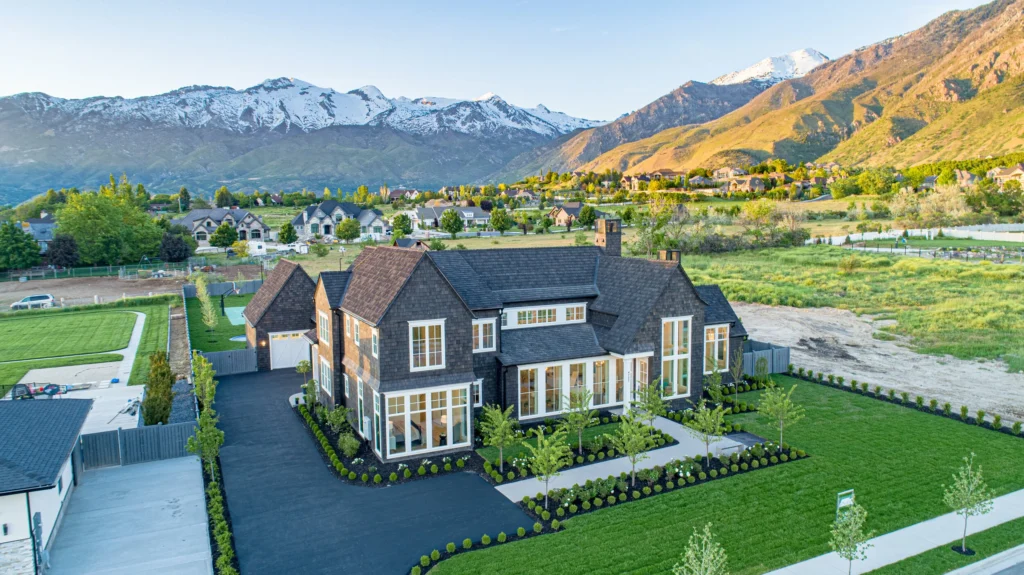
So, what are the most fire resistant roofing materials?
Synthetic composite roofing materials and metal roofing materials are among the most fire resistant building materials. Since these type of roofing materials are specifically designed and engineered to withstand extreme fire and heat resistance, they provide homeowners with the protection they expect from a Class A fire rated material.
CEDUR is a composite synthetic material that provides stand-alone Class A fire resistance. In other words, other materials that are marketed as Class A fire rated require a special fire resistant underlayment to be installed underneath the roofing product in order to ensure that the entire roof system is Class A fire rated. In comparison, the CEDUR product itself is Class A fire rated without the need for that special fire resistant roofing underlayment.
Checkout the videobelow to see why stand alone Class A fire rated CEDUR composite roofing shakes are the most fire resistant roofing material.